Saturday, August 7, 2021

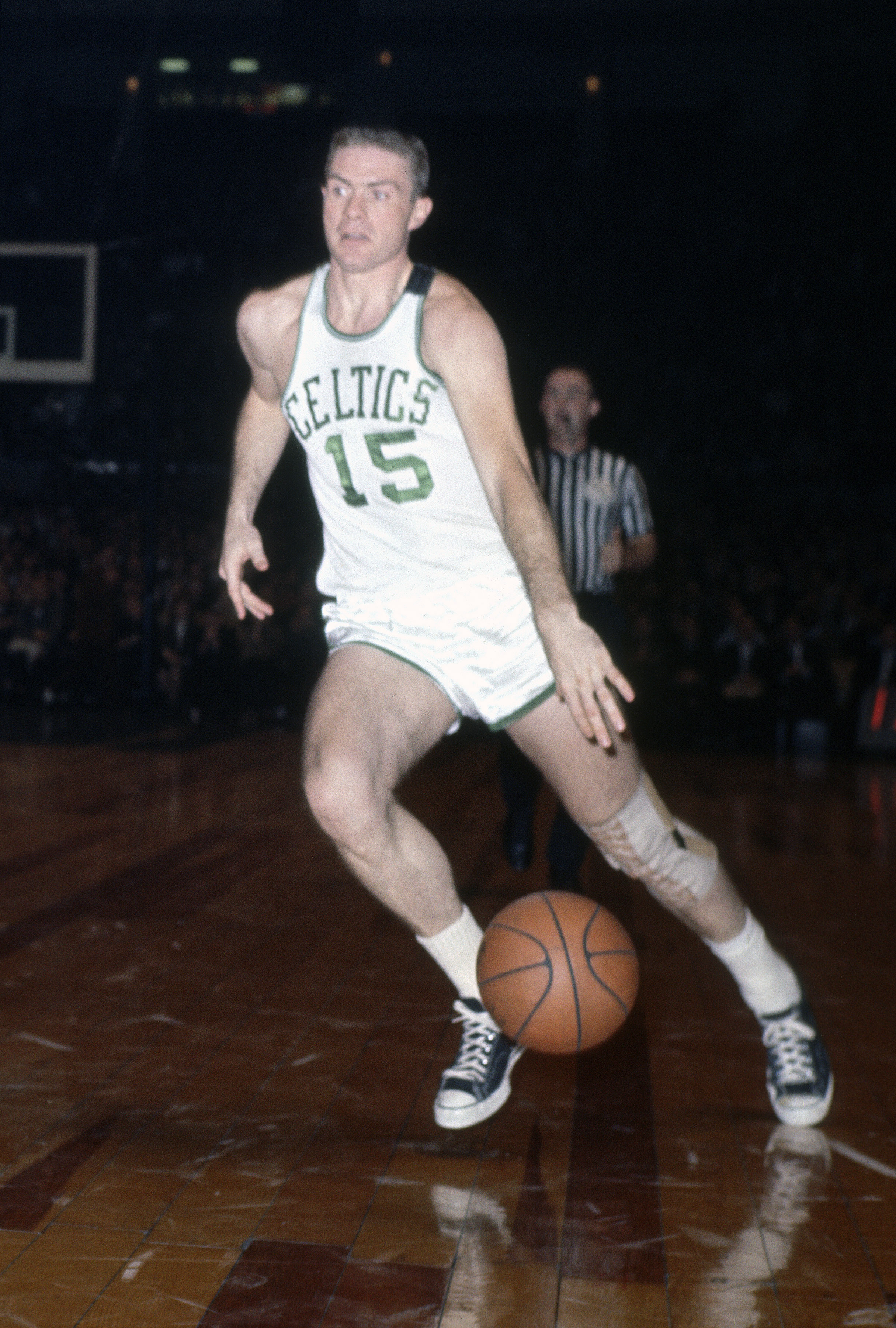
Top 100 NBA Players: #85 - Tom Heinsohn


Tom Heinsohn

Teams

Boston Celtics - 1956-65


Playoffs

Appearances - 9 (1957,1958,1959,1960,1961,1962,1963,1964,1965)

Conference Finals - 9 (1957,1958,1959,1960,1961,1962,1963,1964,1965)

NBA Finals - 9 (1957,1958,1959,1960,1961,1962,1963,1964,1965)

Championships - 8 (1957,1959,1960,1961,1962,1963,1964,1965)


Awards and Honors

Rookie of the Year - 1957

All-NBA Second Team - 4 (1961,1962,1963,1964)

Hall of Fame - 1986

*(actual in bold, deserved in italics)


All-Time Ranks

none


League Leads

Free Throw Percentage (#4-1963,1964)


Tom Heinsohn was a star basketball player at Holy Cross University in Worcester, Massachusetts, averaging 27.4 points and 21.1 rebounds per game as a senior, leading the Boston Celtics to claim his as a territorial selection in the NBA Draft in 1956, which meant they had to give up their first-round pick in order to claim him before any other team had the chance.

Heinsohn joined another great rookie on the Celtics that season, a center by the name of Bill Russell, and the two were the best rookies in the league that year, with Heinsohn narrowly winning the Rookie of the Year award over his teammate after putting up 16.2 points and 9.8 rebounds as a rookie. That pair helped Bob Cousy lead the Celtics to their first NBA Championship that year.

The following season was the only time in Heinsohn's career that wouldn't end with a championship. Bob Pettit, Cliff Hagan, and the Saint Louis Hawks beat the Celtics 4-2 in the NBA Finals in 1958, but for the rest of his career, Heinsohn was a champion.

He was never the star of the team, always playing alongside bigger stars like Russell, Cousy, and Sam Jones, but he was always one of the team's top scorers and nearly always raised his averages in the playoffs. His best season came in 1962, when he averaged 22.1 points and 9.5 rebounds per game on the Celtics' fourth straight title team.

Heinsohn ended up playing only 9 seasons before a foot injury forced him to retire, which is a shorter career than all but 2 players on this list. He holds the distinction of playing the most seasons of any player to never miss the NBA Finals, and has more championships as a player than anyone but Sam Jones and Bill Russell.

After his playing days ended, he stayed with the Celtics organization, eventually becoming the head coach in 1969 and keeping the job for 9 years. During that time he won the Coach of the Year award once and 2 more NBA titles, and he was later elected to the Hall of Fame as a coach, becoming one of only 4 men to make it as both a player and as a coach.

Heinsohn's career was pretty short by basketball standards, especially for a star player. His stats were very good, but not necessarily amazing. He averaged 18.6 points and 8.8 rebounds for his career, both respectable numbers, but he does not appear on any all-time statistical leaderboard, and the only statistical category in which he ever got close to the league lead was free throw percentage. 

Even though the numbers alone don't make him look like an all-time great, he was a big part of 4 championships with the Celtics and a solid role player for 2 more, with 2 other titles at the end of his career where his skills were diminishing. As far as winners go, Heinsohn is one of the most prolific, and deserves to be honored as one of the greatest players of all time.


Friday, August 6, 2021

Top 100 NBA Players: #86 - Dennis Rodman


Dennis Rodman

Teams

Detroit Pistons - 1986-93

San Antonio Spurs - 1993-95

Chicago Bulls - 1995-98

Los Angeles Lakers - 1998-99

Dallas Mavericks - 1999-00


Playoffs

Appearances - 11 (1987,1988,1989,1990,1991,1992,1994,1995,1996,1997,1998)

Conference Finals - 9 (1987,1988,1989,1990,1991,1995,1996,1997,1998)

NBA Finals - 6 (1988,1989,1990,1996,1997,1998)

Championships - 5 (1989,1990,1996,1997,1998)


Awards and Honors

Defensive Player of the Year - 2 (1990,1991)

All-NBA Third Team - 2 (1992,1995)

Hall of Fame - 2011

*(actual in bold, deserved in italics)


All-Time Ranks

Rebounds Per Game - #12

Total Rebounds - #24

Field Goal Percentage - #69


League Leads

Rebounds Per Game (#1-1992,1993,1994,1995,1996,1997,1998, #2-1991)

Total Rebounds (#1-1992,1993,1994,1998, #2-1991,1996, #3-1997)

Field Goal Percentage (#1-1989)


Dennis Rodman took a very unusual route to the NBA, and his path to NBA greatness was even more unusual. He hardly played high school basketball, and was working as a janitor for a couple of years after high school when he had a huge growth spurt. He enrolled at NAIA school Southeast Oklahoma State, where he averaged 25.7 points and 15.7 rebounds per game over 3 seasons, which got the attention of scouts and helped him get drafted in the second round of the 1986 Draft by the Detroit Pistons.

During his first several seasons in the NBA, Rodman was mostly a bench player for the Pistons. They were a great team at the time, reaching at least the Conference Finals in Rodman's first 5 seasons and winning 2 NBA titles, with Rodman an important bench player. He led the league in field goal percentage in 1989 and won the Defensive POY in the next two seasons.

The following season Rodman was shifted to power forward, and he became hyper-focused on rebounding, leading the league in the category that season for the first of 7 straight seasons. His total of 1530 that season was the highest by any player in 20 years, and no other player has come within 250 of that total since. 

The next season was a tough one for Rodman. His coach resigned, leaving a huge father-figure void in his life, and his marriage was ending, and the Pistons missed the playoffs for the first time in years. After nearly committing suicide late in the season, Rodman decided to change his persona, and from then on he was known just as much for his technical fouls, suspensions, and ever-changing hair color as for his rebounding prowess.

He demanded a trade after the 1993 season, and was sent away to the San Antonio Spurs, where he joined David Robinson on a very good team. The team thrived during the regular season, but fell short in the playoffs, falling in the first round in 1994 and the Conference Finals in 1995. After multiple incidents and public complaints about every level of the organization, Rodman was traded away to Chicago after 2 years with the Spurs.

He is probably most famous for his time in Chicago, thanks to his role alongside all-time greats Michael Jordan and Scottie Pippen in helping the Bulls win 3 straight championships, along with a then-record 72 wins in 1996. The rest of his game suffered as he focused on rebounds, averaging less than 6 points per game throughout his time in Chicago, and his field goal percentage dropped lower each season, down to .431 in 1998, more than 16% lower than his league-leading percentage 9 years earlier.

After the Bulls were dismantled following the 1998 championship, Rodman made brief stops in LA and Dallas, both times wearing out his welcome quickly and being cut by each team. 

Rodman is the ultimate example of a player who excelled at one part of the game while being below average at nearly everything else. His career free throw percentage was only 58%, he averaged less than 2 assists per game for his career, and finished his career with a scoring average of 7.3 per game, which is higher than only one other player on this list. Even though he was not a great all-around player, he was one of the greatest rebounders of all time, and was a solid player on several title teams, which is enough to earn him a spot among the greatest players of all time.


Thursday, August 5, 2021

Top 100 NBA Players: #87 - Gus Williams


Gus Williams

Teams

Golden State Warriors - 1975-77

Seattle SuperSonics - 1977-84

Washington Bullets - 1984-86

Atlanta Hawks - 1986-87


Playoffs

Appearances - 10 (1976,1977,1978,1979,1980,1982,1983,1984,1985,1986)

Conference Finals - 4 (1976,1978,1979,1980)

NBA Finals - 2 (1978,1979)

Championships - 1 (1979)


Awards and Honors

All-NBA First Team - 1 (1982)

All-NBA Second Team - 1 (1980,1983)

NBA Finals MVP - 0 (1979)

*(actual in bold, deserved in italics)


All-Time Ranks

Steals Per Game - #16

Total Steals - #29

Assists Per Game - #81

Total Assists - #86


League Leads

Total Steals (#3-1978,1984, #4-1980)

Steals Per Game (#2-1978, #3-1984, #4-1980)

Total Assists (#4-1983, #5-1984)

Three Pointers Made (#5-1985)


After a very strong senior season at USC, Gus Williams was a first-round pick by the Spirits of Saint Louis of the ABA and a second-round pick by the Golden State Warriors of the NBA, ultimately deciding to go with the Warriors, as the ABA was on its last legs and would merge with the NBA just a year later.

He spent 2 years with the Warriors, and was good, but not spectacular, being named to the All-Rookie Team in 1976 before being allowed to leave in free agency in 1977, when he signed with the Seattle SuperSonics, which was the best move he made in his career.

Williams' first three seasons in Seattle were great. He got better each season, reaching averages of 22.1 points, 4.8 assists, and 2.4 steals per game in 1980, which was the first time he was named to the All-NBA Team, and it was well-deserved. He also helped lead the Sonics on deep playoff runs in each of those seasons, reaching the Finals in 1978 and 1979, winning the title in 1979. Dennis Johnson was named the MVP of those Finals, but Johnson was the higher scorer in that series 29.0 to 22.6.

After reaching the Conference Finals in 1980, the third straight season making it at least that far in the playoffs, Johnson sat out a full season in a contract dispute. Based on his career trajectory, that could have been his best season, but we'll never know. Still, when he returned after a year off, he had by far his best regular season, 23.4 points, 6.9 assists, and 2.2 steals per game, earning him his only All-NBA First Team berth.

Williams played 2 more seasons with Seattle, averaging at least 18 points and 8 assists per game each season, but failed to be named to the All-NBA Team (which he deserved in 1983) or make another deep playoff run. After the 1984 season, he was traded to the Washington Bullets, the team he had faced twice in the NBA Finals a few years earlier.

Williams had one more really good season for the Bullets before his numbers started to dip significantly, and after two seasons in Washington, he signed with the Atlanta Hawks for his farewell season. 

He didn't have a long career, with only 11 seasons on the court, and he missed a full season at his peak, but he was a very good player on both ends of the court for many years, especially during his time in Seattle. He was also a proven winner, putting up the best numbers of his career in the NBA Finals, but he was overlooked when it came to the Finals MVP and the Hall of Fame. He is not being overlooked here, he has earned this spot among the greatest players of all time.


Wednesday, August 4, 2021

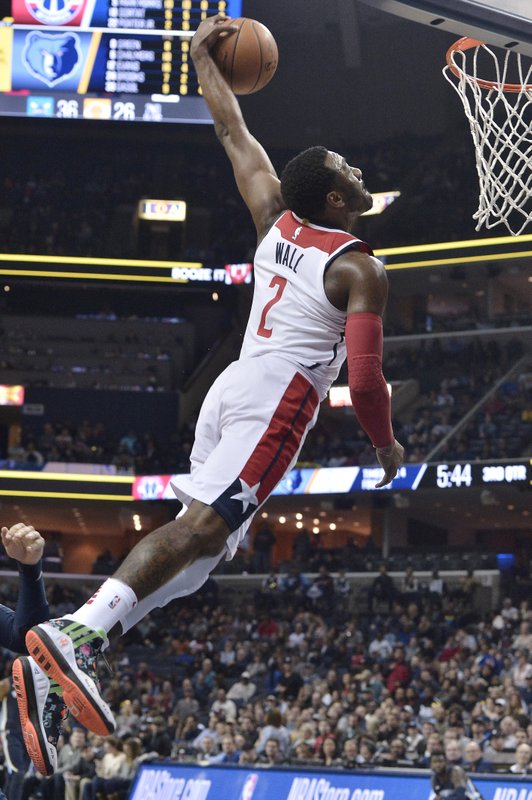
Top 100 NBA Players: #88 - John Wall


John Wall

Teams

Washington Wizards - 2010-2019

Houston Rockets - 2020-current


Playoffs

Appearances - 4 (2014,2015,2017,2018)

Conference Finals - 0

NBA Finals - 0

Championships - 0


Awards and Honors

All-NBA First Team - 0 (2017)

All-NBA Second Team - 0 (2014,2015,2016)

All-NBA Third Team (2017)

*(actual in bold, deserved in italics)


All-Time Ranks

Assists Per Game - #7

Total Assists - #49

Steals Per Game - #52

Points Per Game - #91


League Leads

Total Assists (#1-2014, #2-2015, #3-2016,2017, #4-2012)

Assists Per Game (#2-2014,2015,2017, #3-2016)

Total Steals (#1-2017)

Steals Per Game (#2-2017)


John Wall played just one season at the University of Kentucky, but he knew going into that season that he was the likely #1 pick the following season, and he did nothing in college to change that, landing with the Washington Wizards at #1 overall in 2010.

Wall made an immediate impact, averaging 16.4 points and 8.3 assists per game, and only lost the Rookie of the Year award because the previous season's #1 pick, Blake Griffin, had not played in his first season, and had an amazing first season at the same time as Wall.

Wall missed the first chunk of his third season with a knee injury, but once he returned to the lineup, he hadn't lost a step. Over the next 4 seasons he was named an All-Star, but was overlooked when it came to the All-NBA Teams, finally making an appearance on the Third Team in 2017. That year, he led the league in steals and was #2 in both assists and steals per game, and he led them to the second round of the playoffs, where they fell to the Celtics in 7 games. That year is even more remarkable considering that Wall had surgery on both knees before the season.

Injuries had nagged at Wall through his first 7 seasons, but he hadn't missed a ton of games as a result, but that started to change in 2017-18. He started having trouble with his left knee again, and opted for midseason surgery, which caused him to miss 2 months. He returned in time for the playoffs, but it wasn't enough to stop the Wizards from falling in the first round.

The following season things really started to fall apart. He suffered a heel injury a couple months into the season, and season-ending surgery was required, but then the incision from the surgery became infected, and then he tore his Achilles while recovering from surgery at home. In ended up costing him a season and a half, and after he was finally recovered, he was traded to the Houston Rockets.

Scheduled rest and a hamstring injury cost Wall 32 games in his first season with the Rockets, but when he was on the court he showed that he was still the same player as before. He averaged 20.6 points, third-highest for a season in his career, and still dished out 6.9 assists per game playing for a terrible team. In all, he played in only 113 games over the last 4 seasons combined, but he is still only 30 years old and appears to have a lot left in the tank.

Wall is already in the top 50 of all time for assists, and his 9.1 per game for his career so far is #7 among all players ever. He is also in the top 100 in scoring and steals per game for his career, has led the league in assists and steals once each, and was consistently among the assist leaders for his entire time in Washington. Hopefully he is able to be fully healthy going forward so he can continue to build on what he's done so far, but he's done enough already to at least be mentioned alongside the other all-time greats.


Tuesday, August 3, 2021

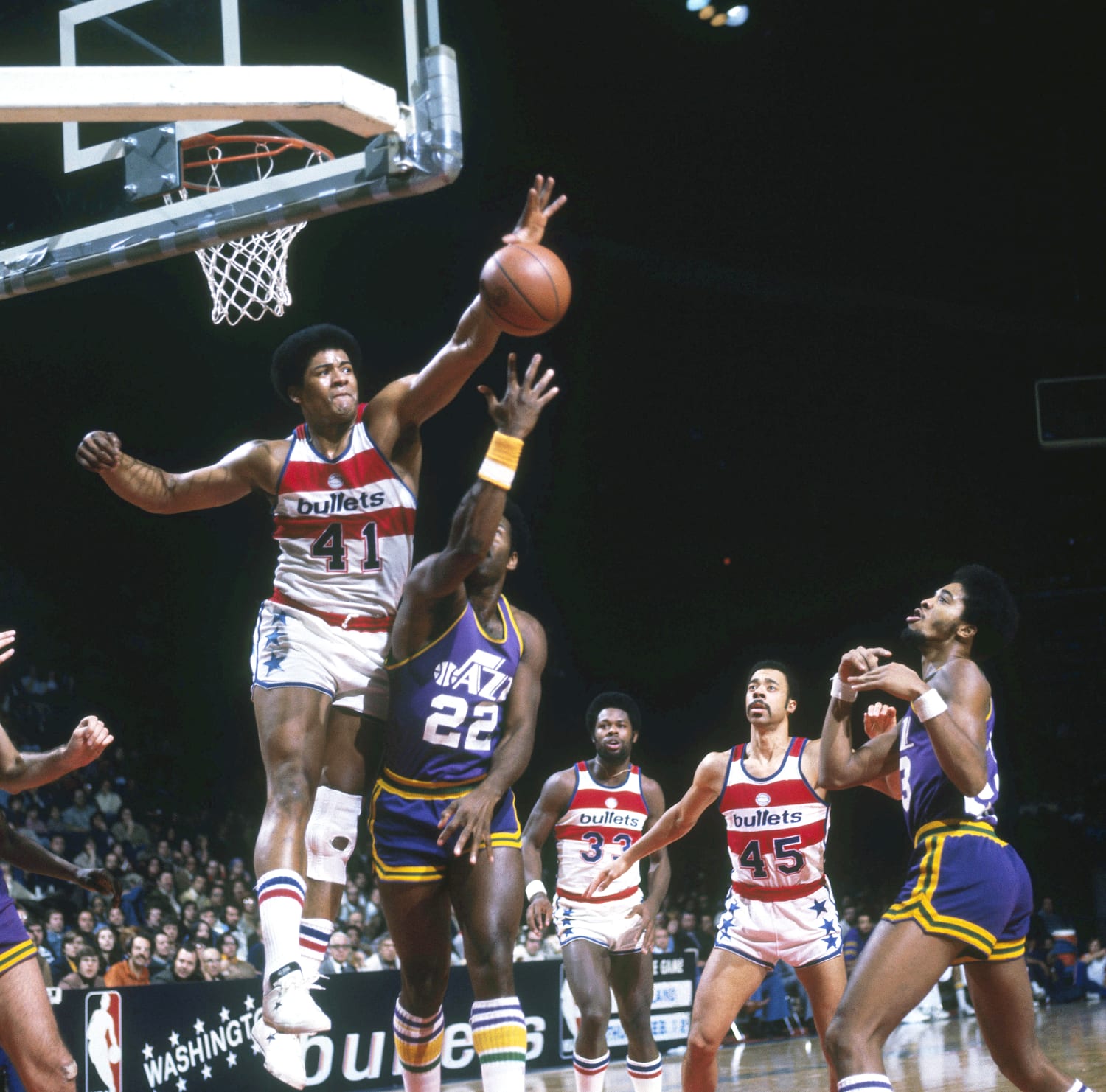
Top 100 NBA Players: #89 - Wes Unseld


Wes Unseld

Teams

Baltimore/Capital/Washington Bullets - 1968-81


Playoffs

Appearances - 12 (1969,1970,1971,1972,1973,1974,1975,1976,1977,1978,1979,1980)

Conference Finals - 4 (1971,1975,1978,1979)

NBA Finals - 4 (1971,1975,1978,1979)

Championships - 1 (1978)


Awards and Honors

Rookie of the Year - 1969

MVP - 1969

Finals MVP - 1978

All-NBA First Team - 1 (1969)

Hall of Fame - 1988

*(actual in bold, deserved in italics)


All-Time Ranks

Rebounds Per Game - #7

Total Rebounds - #14


League Leads

Total Rebounds (#2-1969,1970, #3-1972,1975,1976,1980, #4-1973, #5-1971)

Rebounds Per Game (#1-1975, #2-1970,1971,1972, #3-1976,1980, #5-1969,1973)

Field Goal Percentage (#1-1976, #3-1979)


After averaging 20.6 points and 18.9 rebounds in his college career playing for his hometown Louisville Cardinals, Wes Unseld was drafted #2 overall by the Baltimore Bullets, rejecting an offer from the Kentucky Colonels of the ABA, who had also drafted the local hero. He never scored close to that level in the NBA, but the rebounding translated well.

His rookie season of 1968-69 was one for the ages. Unseld averaged 13.8 points and 18.2 rebounds per game, and led the Bullets to 57 wins, best in the league, just one season after they had finished last in the East. For his efforts he was named both Rookie of the Year and MVP, only the second player ever to achieve that double, following Wilt Chamberlain a decade earlier. 

The team played in Baltimore for Unseld's first 5 seasons, and he averaged at least 12 points and 15 rebounds per game in all 5 of those seasons, guiding them to the playoffs each season and all the way to the Finals in 1971, where they fell to Kareem and the Bucks in 4 games.

The team moved to the suburbs of Washington DC in 1973, where Unseld had his lone subpar season. He was in and out of the lineup, especially early in the season, with lingering injuries, and finished the season with averages of 5.9 points and 9.2 rebounds, the only time he would not finish in double figures in that category.

The team moved into downtown Washington the next season, and in 7 seasons in the nation's capital, Unseld was extremely steady, averaging between 7 and 11 points each year to go along with between 10 and 15 rebounds. He led the league in rebounding in their first season in Washington, and field goal percentage the next year.

They also made the playoffs in each of their first 6 seasons in Washington, extending Unseld's streak to 12 straight playoff appearances to open his career. He led the team back to the Finals in 1975, when they were swept again, this time by Rick Barry and the Warriors.

The team finally broke through in 1978, taking the NBA Championship in 7 games over the Seattle SuperSonics, with Unseld being named the Finals MVP. He averaged 9.0 points and 11.7 rebounds for the series, while Elvin Hayes averaged 20.7 points and 11.9 rebounds, and should have won the MVP in my opinion, though Unseld was always the franchise favorite, which helped him get the award.

The team returned to the Finals the next season, losing to the Sonics in a rematch 4-1, and two years later, after missing the playoffs for the first and only time in his career, Unseld announced his retirement. He remained with the organization for the next 22 years, serving first as vice president, then head coach, and later general manager before retiring for good.

Unseld was well-known for his masterful full-court passes, and he averaged 3.9 assists per game for his career, above average for a center. He was never much of a scorer in the NBA, with a career average of just 10.8, but he was one of the best rebounders throughout his career, even though he was only 6'7", one of the shortest centers in history. He is proof that a player can be one of the best of all time without being a volume scorer and focusing more on defense, and he deserves to be remembered for it.


Monday, August 2, 2021

Top 100 NBA Players: #90 - Amar'e Stoudemire


Amar'e Stoudemire

Teams

Phoenix Suns - 2002-10

New York Knicks - 2010-15

Dallas Mavericks - 2015

Miami Heat - 2015-16


Playoffs

Appearances - 10 (2003,2005,2007,2008,2010,2011,2012,2013,2015,2016)

Conference Finals - 2 (2005,2010)

NBA Finals - 0

Championships - 0


Awards and Honors

Rookie of the Year - 2003

All-NBA First Team - 1 (2005,2007)

All-NBA Second Team - 4 (2005,2007,2008,2010,2011)

*(actual in bold, deserved in italics)


All-Time Ranks

Field Goal Percentage - #39

Total Blocks - #88

Points Per Game - #100


League Leads

Total Points (#3-2005, #4-2008, #5-2011)

Field Goal Percentage (#2-2005, #5-2007,2008)

Points Per Game (#5-2005,2008)

Total Blocks (#5-2008)


Amar'e Stoudemire came to the NBA straight out of high school after averaging 29 points and 15 rebounds per game as a senior, and he was the only high school player drafted in the first round in 2002 when the Phoenix Suns took him with the 9th overall pick. 

His rookie season was very good, with averages of 13.5 points and 8.8 rebounds, which earned him the Rookie of the Year award narrowly over Yao Ming, making him the first-ever to go straight from high school to the NBA Rookie of the Year. He made big improvements on those numbers in his second year, scoring 20.6 points per game in his second season, but a lackluster record cause the team to shake up its roster.

That change, highlighted by the addition of Steve Nash, turned out to be a great thing for Amar'e. He averaged a career-high 26 points per game, plus 8.9 rebounds while shooting 55.9% from the field, which was a huge improvement over his first two seasons. He made the All-NBA Second Team, the team had the #1 seed in the playoffs, and they reached the Conference Finals, where they fell to the Spurs despite Amar'e averaging 37 points per game in the series.

During the following preseason, it was discovered that Stoudemire had cartilage damage in his knee that would require surgery. He was supposed to miss about half of the season, but when he did make a comeback in February, it was clear that he had come back too soon, and he was shut down for the remainder of the season to continue his rehab.

He came back at full health in the next season, and he finished his comeback season with averages of 20.4 points and 9.6 rebounds, earning him a spot on the All-NBA First Team. The team again fell to the Spurs in the playoffs in a controversial series, with Stoudemire being suspended for game 5 after he stood up off the bench when his teammate Steve Nash was flagrantly fouled.

Amar'e remained a superstar for the next several years, but was forced to miss significant time again in 2009, when he was hit in the eye and suffered a detached retina that required eye surgery. He wore goggles on the court for the rest of his career. He returned for one last season in Phoenix, again leading them to the Conference Finals, where they fell to the Lakers.

Stoudemire signed with New York as a free agent in the offseason, and put up similar numbers to what he had for years in Phoenix during his first season as a Knick, which the exception of his field goal percentage, which dropped to .502, his lowest since his second season. New York did make the playoffs that year, but fell in the first round after Stoudemire hurt his back and was not at full strength.

Back issues continued to plague him through the next season, and in 2012-13 he had multiple knee issues that caused him to miss most of the season, and had him coming off the bench instead of starting when he was in the lineup. Over the next couple seasons, even while he was relatively healthy, he continued to function as a sixth man, and he and the team eventually decided to part ways midway through the 2014-15 season.

He retired from the NBA after the 2016 season, even though he was only 33 years old. He still played professionally in Israel and China over the next few years, even winning the Finals MVP in Israel in 2020 before retiring for good.

Stoudemire is another player whose promising career was derailed by injuries, and his first major injury couldn't have come at a worse time, just as he was establishing himself as one of the best players in the league. He still managed to come back and play at a superstar level for several more years, but no one knows what levels he may have reached if he remained healthy. Still, he played at such a high level for the better part of a decade that he has earned this spot as one of the best players in the history of the league.


Sunday, August 1, 2021

Top 100 NBA Players: #91 - Bob Lanier


Bob Lanier

Teams

Detroit Pistons - 1970-79

Milwaukee Bucks - 1980-84


Playoffs

Appearances - 9 (1974,1975,1976,1977,1980,1981,1982,1983,1984)

Conference Finals - 2 (1983,1984)

NBA Finals - 0

Championships - 0


Awards and Honors

All-NBA First Team - 0 (1974,1975,1977)

All-NBA Second Team - 0 (1972,1973)

Hall of Fame - 1992

*(actual in bold, deserved in italics)


All-Time Ranks

Total Rebounds - #47

Rebounds Per Game - #57

Total Points - #60

Blocks Per Game - #62

Points Per Game - #70

Total Blocks - #80

Field Goal Percentage - #88


League Leads

Field Goal Percentage (#4-1976, #5-1977)

Blocks Per Game (#4-1974, #5-1975)

Total Rebounds (#5-1974)

Total Blocks (#3-1974)


Bob Lanier was a superstar from the day he started playing in college for St. Bonaventure, leading them to the NCAA Tournament twice and averaging 27.6 points and 15.7 rebounds in his college career. He suffered a knee injury in his final college game, which kept him from playing in the Final Four, but it didn't stop him from being drafted #1 overall by Detroit in the NBA and as a territorial pick by the Nets from the ABA.

He decided to play for Detroit, and he even signed his contract while still in the hospital recovering from surgery. Rather than letting him fully heal, the team decided to play him immediately, a choice that may have severely hampered his later years. Still, he averaged 15.6 points and 8.1 rebounds and made the All-Rookie First Team.

After his rookie season he went on a monster run, with 7 straight seasons averaging at least 21 points and 11 rebounds per game, with highs of 25.7 points in 1972 and 14.9 rebounds in 1973. He also averaged 3 blocks per game in 1974, the first season in which they were recorded, which was 4th-best in the league that year.

While he was steady during his decade in Detroit, the team was not. He played for 8 different coaches in 10 years, and the team only made the playoffs 4 times, winning a playoff series only once. His knees also started to cause problems, and he missed at least 18 games in each of his 4 final seasons in Detroit.

He was traded to the Milwaukee Bucks midway through the 1979-80 season, joining a team with a lot more talent that allowed him to not have to carry the team every night. He never averaged more than 16 points in Milwaukee, but they never missed the playoffs, and made 2 trips to the Conference Finals, losing to the eventual champions both times. He retired in 1984 after his 8th knee surgery.

Lanier's best seasons all came during the time when Kareem Abdul-Jabbar was at his prime in Milwaukee, so he is often overlooked because there was a better player at the same position the whole time. He also was never able to reach the NBA Finals or win a title, which also decreases visibility and recognition, but he was one of the very best players in the league for the better part of a decade, and deserves to be recognized as one of the greatest players of all time.