Showing posts with label Neil Johnston. Show all posts

Saturday, September 3, 2016

Top 100 NBA Players: #28 - Bob Cousy


Bob Cousy

Bob Cousy was one of the greatest guards in the early days of the NBA, a man who held the record for most consecutive seasons leading the league in assists for over 30 years, and a proven winner who needs to use both hands in order to wear all of his championship rings.

Many people try to say that Cousy would have had more assists in today's NBA, where assists are supposedly easier to come by, but I showed in my profile on John Stockton (#83) that this was not true. The average assists per team per game has been largely unchanged over the past 60 years, with the only dry period for assists coming in the league's first 5 seasons. The fact is that the average in 1953, Cousy's first season leading the league in assists, was 21.1 per game, while today that average has skyrocketed to 21.5.

The real reason that Cousy did not get more assists during all those seasons he was leading the league is that there was no position called point guard back then, just guards. Because of this, there was no designated ballhandler on any certain team, which makes it even more impressive that Cousy led the league for 8 straight seasons.

Another thing that makes Cousy one of the greats is that he was the best player in the entire league for two seasons early in his career. In 1954 and 1955, before the MVP award had been created, Cousy was arguably the league's elite star, with Neil Johnston as his nearest competitor. Here are their stats from those two seasons:

Cousy (1954) - 19.2 pts, 5.5 reb, 7.2 ast, .385 FG%, .787 FT%, 42-30 record
Johnston (1954) - 24.4 pts, 11.1 reb, 2.8 ast, .449 FG%, .747 FT%, 29-43 record

Cousy (1955) - 21.2 pts, 6.0 reb, 7.8 ast, .397 FG%, .807 FT%, 36-36 record
Johnston (1955) - 22.7 pts, 15.1 reb, 3.0 ast, .440 FG%, .766 FT%, 33-39 record

Both players were great scorers for the time (ranked #1 and #2 in both seasons), and both were great at their areas of specialty (assists for Cousy and rebounds for Johnston), but Cousy was also a very good rebounder, while Johnston was not known for passing the ball much. Cousy's teams were also much better then Johnston's and made the playoffs both years, something Johnston's Warriors teams didn't.

Some people will say that Cousy won all those championships because of Bill Russell, but the truth is that without Cousy, they may not have won the first four of those titles. In fact, during Russell's rookie season of 1956-57, Cousy was still the best player on the Celtics' title team, and he was still the best player the next year when they lost in the Finals. That's when Russell took over as the star, but Cousy was still #2 in Boston for three more seasons, and was still an important player on the next two title teams, retiring after winning his sixth title. Before Russell even arrived, Cousy had led Boston to three straight Eastern Conference Finals, so there is no doubt that he was a winner, but the combination of Russell and Cousy was what made them unstoppable.

Saturday, July 30, 2016

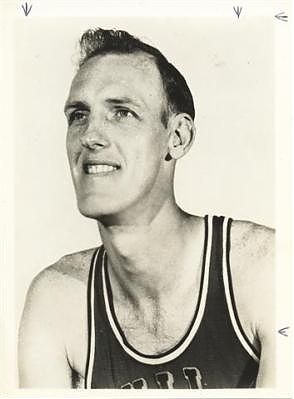
Top 100 NBA Players: #66 - Neil Johnston


Neil Johnston

Neil Johnston is another of the forgotten greats from the early days of the NBA, overlooked because of the era in which he played and the shortness of his career. While he definitely doesn't have the longevity needed to be remembered as one of the very best players of all time, the peak period of his career was very impressive.

From 1952-1957, he enjoyed one of the most steady and productive periods of any player ever. During that time, his scoring average was always between 22 and 25 points per game, including 3 seasons in which he led the league. He also averaged between 11.1 and 15.1 rebounds per game, and also led the league in that category once. His shooting percentage was between .440 and .460 in each season, and he also led the league 3 times in shooting. The only category in which he experienced a major change was free throw shooting, which he improved each season, from .700 in 1953 to .826 in 1957.

While he was one of the best players during the regular season during that 5-year period, ranking among the top five players in the league in each of those seasons, his success did not translate over to the postseason. Only once did he experience any measure of playoff success, and that was 1956, when he, along with Paul Arizin and Tom Gola, led the Philadelphia Warriors to the NBA title. During the regular season, he had been the best player on the team, but Arizin was more impressive in the playoffs.

There are very few players who have led the league in scoring 3 times, and even fewer who also led the league in shooting percentage 3 times and rebounding once, so there is no doubt that Johnston deserves a mention as one of the all-time greats, but he lacked the longevity of most league leaders, which prevented him from rising any higher in the rankings, but at least he isn't being forgotten completely.

Monday, July 11, 2016

Top 100 NBA Players: #87 - Paul Arizin


Paul Arizin

Paul Arizin was one of the earliest stars in the NBA, and unlike most of the other players on this portion of the list, injuries were not the reason he didn't make it higher on the list. Arizin was drafted in 1950 by his hometown Philadelphia Warriors, and went on to average 17.2 points and 9.8 rebounds as a rookie, earning Rookie of the Year honors.

He really took a leap in his second season, leading the league in field goal percentage (.448) and scoring (25.4 ppg) while also pulling down 11.3 rebounds per game. Those numbers earned him a spot on the All-NBA First Team, but right when he was looking like the next big star, he joined the Marines for two years to fight in Korea, taking away a big chunk of the prime of his career.

When he returned, he was not quite at the same level as before, but he still finished #2 in the league in scoring at 21.0 per game, behind his teammate Neil Johnston. The next season was a special one, with Arizin making the All-NBA First Team for the second time and leading the Warriors to the league's best record at 45-27. During the playoffs, Paul boosted his numbers to 28.9 points and 8.4 rebounds and earned Philadelphia the championship.

He was never able to win another championship during his career, but he did continue to score a lot of points, reaching 20 points per game for 9 straight seasons. He led the league in scoring twice, field goal percentage once, and minutes per game twice, along with being the best player on a championship team.

Even with all of that, perhaps the biggest contribution Arizin made to the game of basketball was the invention of the jump shot. He developed it as a young man playing in recreational leagues, which often used ballrooms as their courts. He said that the floors were often so slippery that he couldn't keep his footing while shooting a hook shot, so he developed the jump shot so that he could keep his balance while shooting. It would turn out to be one of the most important innovations in the history of the sport, and did a lot to help him become one of the greatest players of all time.

Tuesday, August 30, 2011

Top 100 NBA Players: #36


Bob Cousy

(Kalb: #10, Simmons: #21, BBR: #42)

Bob Cousy was one of the greatest guards in the early days of the NBA, a man who held the record for most consecutive seasons leading the league in assists for over 30 years, and a proven winner who needs to use both hands in order to wear all of his championship rings.

Many people try to say that Cousy would have had more assists in today's NBA, where assists are supposedly easier to come by, but I showed in my profile on John Stockton (#60) that this was not true. The average assists per team per game has been largely unchanged over the past 60 years, with the only dry period for assists coming in the league's first 5 seasons. The fact is that the average in 1953, Cousy's first season leading the league in assists, was 21.1 per game, while today that average has skyrocketed to 21.5.

The real reason that Cousy did not get more assists during all those seasons he was leading the league is that there was no position called point guard back then, just guards. Because of this, there was no designated ballhandler on any certain team, which makes it even more impressive that Cousy led the league for 8 straight seasons.

Another thing that makes Cousy one of the greats is that he was the best player in the entire league for two seasons early in his career. In 1954 and 1955, before the MVP award had been created, Cousy was arguably the league's elite star, with Neil Johnston as his nearest competitor. Here are their stats from those two seasons:

Cousy (1954) - 19.2 pts, 5.5 reb, 7.2 ast, .385 FG%, .787 FT%, 42-30 record
Johnston (1954) - 24.4 pts, 11.1 reb, 2.8 ast, .449 FG%, .747 FT%, 29-43 record

Cousy (1955) - 21.2 pts, 6.0 reb, 7.8 ast, .397 FG%, .807 FT%, 36-36 record
Johnston (1955) - 22.7 pts, 15.1 reb, 3.0 ast, .440 FG%, .766 FT%, 33-39 record

Both players were great scorers for the time (ranked #1 and #2 in both seasons), and both were great at their areas of specialty (assists for Cousy and rebounds for Johnston), but Cousy was also a very good rebounder, while Johnston was not known for passing the ball much. Cousy's teams were also much better then Johnston's and made the playoffs both years, something Johnston's Warriors teams didn't.

Some people will say that Cousy won all those championships because of Bill Russell, but the truth is that without Cousy, they may not have won the first four of those titles. In fact, during Russell's rookie season of 1956-57, Cousy was still the best player on the Celtics' title team, and he was still the best player the next year when they lost in the Finals. That's when Russell took over as the star, but Cousy was still #2 in Boston for three more seasons, and was still an important player on the next two title teams, retiring after winning his sixth title. Before Russell even arrived, Cousy had led Boston to three straight Eastern Conference Finals, so there is no doubt that he was a winner, but the combination of Russell and Cousy was what made them unstoppable.


Cousy and Worthy were actually quite similar, both being known as the sidekick on great championship dynasties. Both played in at least 6 NBA Finals, with Cousy winning twice as many titles as Worthy (6 to 3). Cousy had the distinction of being the best player in the NBA for a couple years, while Worthy never approached that level. All in all, it seems quite obvious that Cousy has to be ranked higher on this list.

Wednesday, July 13, 2011

Top 100 NBA Players: #82


Chris Mullin

(Simmons: #82, BBR: #60)

Chris Mullin might not be remembered too well by younger NBA fans, but those of us who have been watching the league for a while definitely remember his days with the Golden State Warriors in the late 80's and early 90's. Back then he was one third of the trio known as "Run TMC," along with Mitch Richmond and Tim Hardaway, a team that was remembered for their fast-paced style.

Mullin was the best player on those teams, averaging over 25 points per game for 5 straight seasons, a feat only one other Warrior in history has accomplished, a player you may have heard of named Wilt Chamberlain. During the last three seasons of that run he also averaged over 40 minutes per game, twice leading the league in that category, but all the extra minutes wore down his body, and he spent the next four seasons in and out of the lineup, missing 140 games over those four years.

Mullin was not only a great scorer, he also had a great shooting touch. He shot nearly 51% for his career from the field and 86.5% from the free throw line, which included a league-leading 93.9% in 1998. His three-point shooting improved throughout his career, and he hit over 40% from long distance 5 times.

Mullin's major downfall, like that of many others, is that he was not successful in playoff basketball. While with Golden State, he never advanced past the second round of the playoffs, and by the time he reached the Conference Finals and NBA Finals with the Indiana Pacers, he was no longer a major factor in their success. He did score some major points in 1989 with 29.4 points, 5.9 rebounds, and 4.5 assists per game, but that playoff run only lasted 8 games.


Mullin, like Johnston before him, was a superstar for the Warriors who didn't enjoy much playoff success. Both players' peaks lasted about the same amount of time, but Mullin's peak was much higher than Johnston's, which allows him to trump the championship that Johnston brought to the franchise. The longer tail at the end of Mullin's career did nothing for him historically, so Johnston would not have gained anything by holding on for another 8 years like Mullin did.

Tuesday, July 12, 2011

Top 100 NBA Players: #83


Neil Johnston

(BBR: #241)

Neil Johnston is another of the forgotten greats from the early days of the NBA, overlooked because of the era in which he played and the shortness of his career. While he definitely doesn't have the longevity needed to be remembered as one of the very best players of all time, the peak period of his career was very impressive.

From 1952-1957, he enjoyed one of the most steady and productive periods of any player ever. During that time, his scoring average was always between 22 and 25 points per game, including 3 seasons in which he led the league. He also averaged between 11.1 and 15.1 rebounds per game, and also led the league in that category once. His shooting percentage was between .440 and .460 in each season, and he also led the league 3 times in shooting. The only category in which he experienced a major change was free throw shooting, which he improved each season, from .700 in 1953 to .826 in 1957.

While he was one of the best players during the regular season during that 5-year period, ranking among the top five players in the league in each of those seasons, his success did not translate over to the postseason. Only once did he experience any measure of playoff success, and that was 1956, when he, along with Paul Arizin and Tom Gola, led the Philadelphia Warriors to the NBA title. During the regular season, he had been the best player on the team, but Arizin was more impressive in the playoffs.


You can see from this chart that Johnston was a better overall player than Rondo, but his peak was relatively short and his playoff success was pretty scarce, while Rondo has already accomplished more in the playoffs in just 5 seasons than Johnston did in his eight years. Even without the playoff numbers, Johnston has to be ranked ahead of Rondo at this point in his career.