Showing posts with label Cleveland Indians. Show all posts

Thursday, July 12, 2018

Top 106 Baseball Players: #25 - Tris Speaker


Tris Speaker

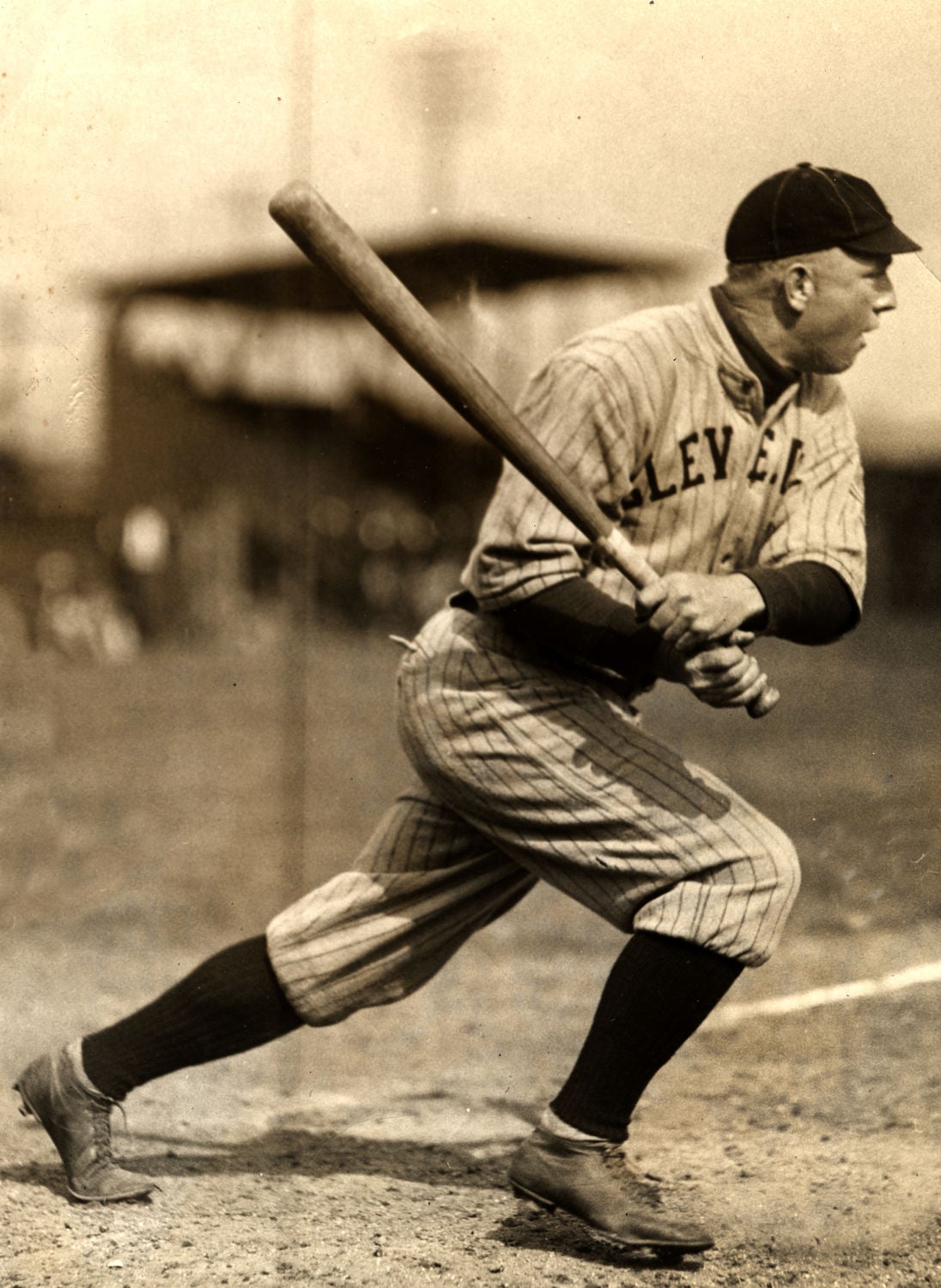
Tris Speaker was one of the greatest hitters in history, and one of the first great outfielders in the game of baseball.

Tris began his career with the Boston Americans in 1907, the year before they changed their name to the Red Sox. He did not play much in his first two seasons, but became the starting center fielder in his third season, and that year was the first of 10 in a row where he hit above .300.

He improved steadily until 1912, when he won the MVP after leading the league with 53 doubles and 10 home runs, and he also had 222 hits and a .383 average. His Red Sox won the pennant, and Speaker hit .300 in that World Series, winning his first championship as well.

In 1915 the Red Sox added a young pitcher named Babe Ruth, and the star pair led the Red Sox back to the World Series, though Speaker hit only .322 that season, his worst since 1909. The combination of the two was enough to bring home another title to Boston, but Speaker was asked to take a pay cut after the season due to his low batting average, and after refusing, he was traded to the Indians.

Speaker responded to the trade with his best season yet, leading the league in hits, doubles, batting average, slugging percentage, and on-base percentage. For his first 4 seasons with the Indians, he served unofficially as the team's assistant manager, as he was consulted on all in-game moves. When the manager resigned after misunderstanding one of Speaker's signals, he was made the official manager.

His first full season as player/manager was 1920, and he had his very best season that year. Though he only led the league in his specialty, doubles, he had a batting average of .388, 214 hits, a career-high 137 runs scored, and reached 100 RBI for the first time in his career. He also took the Indians to the World Series, where he hit .320 as the Indians beat the Dodgers in 7 games to claim the title, his third in 3 tries.

He led the league in doubles again in each of the next 3 seasons, and also led the league in RBI in 1923, a career first at age 35. Over the course of his 11 seasons in Cleveland, he batted over .350 7 times during the period that bridged the dead-ball era and the live-ball era.

Speaker led the league in doubles 8 times in his career, and his 792 are still the career record. He is #6 in triples, and is the most recent player to reach 200 for his career in that category. His career batting average of .345 is #6 all-time, which is especially great since he played half of his career in the deal-ball era, and he was solid in all 3 of his World Series appearances, finishing his career with 3 titles, and a place among the greatest baseball players of all time.


Tuesday, July 10, 2018

Top 106 Baseball Players: #26 - Cy Young


Cy Young

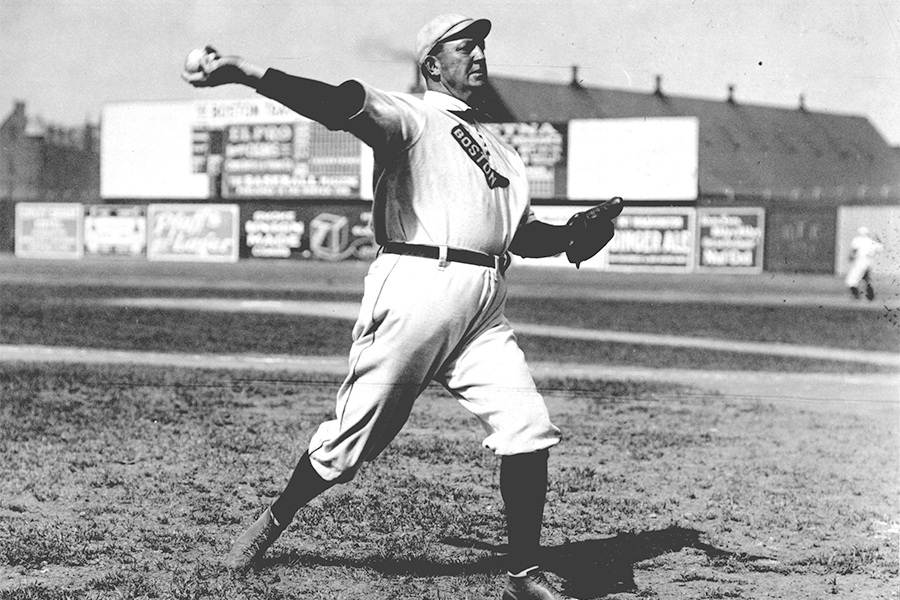
Cy Young is a name that is well known to baseball fans, though many do not know as much about the player as about the award that was named in his honor.

Young first pitched in the Major Leagues in 1890 with the Cleveland Spiders, and by his third season he was the best pitcher in the league, finishing with 36 wins, a 1.93 ERA, and 9 shutouts, all best in the league. Following that season, the pitching mound was moved back to its current distance, partially due to the speed with which he pitched.

In 1896 he led the league in strikeouts for the first time, and pitched his first no-hitter the next season. After the 1898 season, his team's owner purchased another team in St. Louis and transferred most of his best players over to his other team, first known as the Perfectos before changing to the Cardinals, but the team struggled in Young's two seasons there, and he jumped ship to the new American League and the Boston Americans when they formed in 1901.

His first season in Boston was a great one, as Young won the pitching Triple Crown with 33 wins, 158 strikeouts and a 1.62 ERA. Had the Cy Young award existed at the time, he definitely would have won it, but that season was a huge part of his legend that made the award a reality down the road.

The first World Series was held in 1903, with Young's Americans playing the Pittsburgh Pirates, and Young holds the distinction of throwing the first ever World Series pitch. Though he lost that game, he won his next 2 starts to lead them to a 5-3 series victory. He finished the series with a 1.85 ERA, and also had 3 RBI in game 5 as a batter.

In 1904, Young threw the first perfect game in AL history, and the first under current pitching rules. (When the previous 2 perfect games had been thrown, 8 balls equaled a walk.) That game was part of a longer streak of not allowing a hit, which extended to 76 batters, which is still the record today. He threw a third no-hitter in 1908, when he was 41 years old, and it stood as the record for the oldest pitcher to throw one for 82 years, when Nolan Ryan threw one at age 43.

Young is the all-time leader in many pitching categories, including wins, innings pitched, starts, and complete games, but also in runs allowed, hits allowed, and losses. The wins record is another that will probably never be broken, as he is 94 ahead of Walter Johnson, who is #2 on the list, and has more than double the total of active leader Bartolo Colon.

His pitching greatness over such a long period led to the creation of the Cy Young award in 1956, the year after he passed away. There have been many great pitchers over the years who have won that award, but very few who have ever reached the level of excellence achieved by its namesake, who is obviously one of the best baseball players of all time.


Thursday, July 5, 2018

Top 106 Baseball Players: #30 - Frank Robinson


Frank Robinson

Frank Robinson was a groundbreaking player and manager for multiple teams in a long and outstanding career.

Robinson joined the Cincinnati Reds in 1956 when he was 20 years old, and he led the league in runs scored as a rookie, while also tying the rookie home run record, which was 38 (broken by Aaron Judge last season). That solid debut season earned him the Rookie of the Year Award.

He maintained that level of play for several seasons, before exploding in 1961, when he led the league with a .611 slugging percentage to go along with 117 runs and 124 RBI's. That season he led the Reds to the pennant, which resulted in a World Series loss to the Yankees, but he was awarded his first MVP award for the stellar season.

The next season he improved in nearly every single category, and had arguably his best season, when he hit .342, led the league with 134 runs and 51 doubles, and set career highs with 208 hits and 136 RBI. He only finished 4th in the MVP voting that year, even though he was even more deserving than the year before.

After 3 more years with the Reds, the team decided to move on from Robinson, trading him to the Orioles, and in his first season in Baltimore he had a season for the ages. He won the Triple Crown with 49 home runs, 122 RBI, and a .316 average, while also leading the league in runs and total bases, earning another MVP, and becoming the only player ever to win an MVP in each league.

The Orioles advanced to the World Series that year, and Robinson was named the MVP after hitting 2 home runs in the 4-game sweep of the Dodgers, including a solo shot to score the only run in the decisive final game. In a series dominated by pitching, Robinson was the offensive constant that made the difference.

From 1969 to 1971, the Orioles made 3 more playoff appearances, reaching the World Series each time, and they won the title in 1970 against Robinson's old team, the Reds, earning him a second championship ring. After the 1971 season, he was traded to the Dodgers, then to the Angels the following season.

Around this time Robinson decided that he wanted to become a manager, and because of that desire, he was traded to the Indians, where he was installed as player/manager, making him the first black manager in league history. Several years later, when he was hired to manage the Giants, he became the first black manager in the NL as well.

At the time of his retirement as a player, Robinson was #4 in home runs, behind Ruth, Aaron, and Mays, and has since fallen back to #10. His number was retired by Cincinnati, Baltimore, and Cleveland, making him one of only 2 players (along with Nolan Ryan) to have his number retired by 3 teams. He is still the only player to win an MVP in each league, a rare batting Triple Crown winner, a World Series MVP, and one of the greatest baseball players of all time.

Sunday, June 24, 2018

Top 106 Baseball Players: #41 - Manny Ramirez*


Manny Ramirez

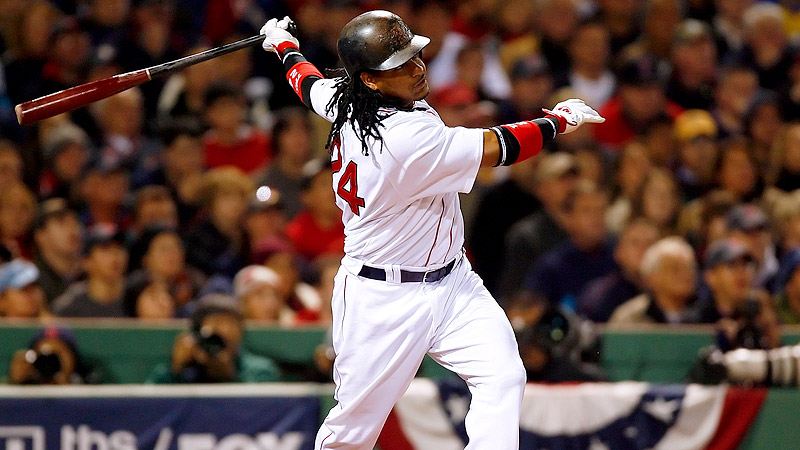
Manny Ramirez was one of the most colorful players in recent memory, and was well-known for his great playoff performances, but he is the second straight player in this countdown whose reputation was tarnished by testing positive for steroids.

Manny first played in the Majors for the Indians near the end of 1993, and came in #2 in the Rookie of the Year voting in 1994. In 1995, he reached 30 home runs and 100 RBI's, which are benchmarks he would reach 11 more times in the next 13 seasons, which is a testament to his incredible consistency.

That was also the first of 5 consecutive seasons in which the Indians would reach the postseason with Ramirez on board. That included trips to the World Series in 1995 and 1997, when they lost to the Braves and the Marlins, and while Ramirez didn't play well in those World Series losses, he hit 13 total home runs in those 5 postseasons.

During the 1999 season, he led the entire league in RBI with 165, and finished third in the MVP voting, the highest he would get in his career. After the Indians failed to reach the playoffs in 2000, he left as a free agent to sign with the Red Sox, with the largest contract in history at that time.

In his second season with Boston, he led the league in batting average at .349, but the Red Sox did not reach the playoffs in his first two seasons there. The addition of David Ortiz to the team in 2003 was the boost the team needed, vaulting them into the playoffs, where they lost in 7 games to the Yankees during the ALCS.

In 2004, Ramirez led the league with 43 home runs and a .613 slugging percentage, and the Red Sox returned to the playoffs, where they again met the Yankees in the ALCS. This time, they fell behind 3-0, but rallied to win 4 in a row behind the greatness of his teammate, Ortiz. In the World Series, Ramirez hit .412 in a 4-game sweep to win the World Series MVP award.

The Red Sox won another World Series in 2007, and this time Ramirez was even better. In the ALCS, he hit .409 with 10 RBI as Boston beat Cleveland, and he hit .348 total for the postseason. He also broke the all-time record for playoff home runs that year, hitting his 23rd to pass Bernie Williams, and he would eventually extend his record to 29.

Ramirez was traded to the Dodgers midway through the following season, and he was great in the postseason for LA, batting over .500 in each of the teams' postseason series, but they would fail to reach the World Series that season. He began the 2009 season on a good pace, but just a month into the season was informed that he had failed a drug test and would be suspended for 50 games.

This was the second time that Ramirez had been caught cheating. He had tested positive in 2003, when the league randomly tested players to determine the extent of steroid use in baseball, but players were given immunity for positive tests during that round of testing. After joining the Rays in 2011, Ramirez again tested positive for a banned substance, and chose to retire rather than face a 100-game suspension.

Ramirez finished his career with 555 home runs, #15 all-time, and is also #18 all-time in RBI. He hit 21 grand slams in his career, good for third place in history, and is still the all-time leader in postseason home runs. He was a World Series MVP, and a very consistent performer in the regular season, and even with the proof that he cheated on multiple occasions, he is still one of the greatest ever to play the game.


Monday, June 11, 2018

Top 106 Baseball Players: #53 - Bert Blyleven


Bert Blyleven

Bert Blyleven was a pitcher known for his curveball, and he threw it with such consistency that he was able to play for 22 years and pitch nearly 5000 innings.

Blyleven was called up to the Minnesota Twins in 1970, when he was just 19 years old, after only half a season in the minors. By 1973, he led the league in shutouts with 9, and earned Cy Young votes for the first of 4 times in his career.

After two more seasons in Minnesota, he grew unhappy with his salary, so the Twins traded him to Texas. He pitched for the Rangers for a year and a half, and in his final start of the 1977 season he pitched a no-hitter just two weeks after returning from a groin injury. The team, however, objected to a rude gesture he made to the camera during the game and traded him after the season, making him the first player ever to be traded immediately after a no-hitter.

His next stop was Pittsburgh, where in 1979 he was able to reach his first World Series. He gave up only 2 runs in 10 innings of work, easily the best in the series, and won his first championship. Just a season later, however, he grew tired of the Pirates, and again demanded a trade, this time heading to Cleveland.

After an elbow injury cost him most of the 1982 season, he struggled in 1983 upon returning, but was finally at full strength in 1984, when he recorded a 2.87 ERA and finished 3rd in the Cy Young voting, his first time being considered for the award in more than a decade.

Even with him pitching well, the Indians were struggling, so he again asked for a trade, and this time he was sent back to Minnesota, and he had a great season, leading the league with 206 strikeouts, 5 shutouts, and 24 complete games, which is a number no pitcher has approached since.

He passed 3000 strikeouts in 1986, then returned to the World Series in 1987. He won two games in the ALCS, then picked up another win in the World Series, finishing with 12 strikeouts and a 2.77 ERA as he earned his second championship.

He led the league in losses in 1988, and was released as a result. He went to play for the Angels, where he flipped his record, going from 17 losses to 17 wins, which earned him the Comeback Player of the Year award and a 4th-place finish in the Cy Young voting at age 38.

It took 14 years for Blyleven to get voted into the Hall of Fame, and before he was elected he was the only member of the 3000 strikeout club not in the Hall. He never won a Cy Young, and only received votes 4 times, but he was a very effective pitcher for a very long time, and pitched very well in both of his World Series appearances, which has earned him a spot among the best baseball players of all time.


Tuesday, May 29, 2018

Top 106 Baseball Players: #65 - Nap Lajoie


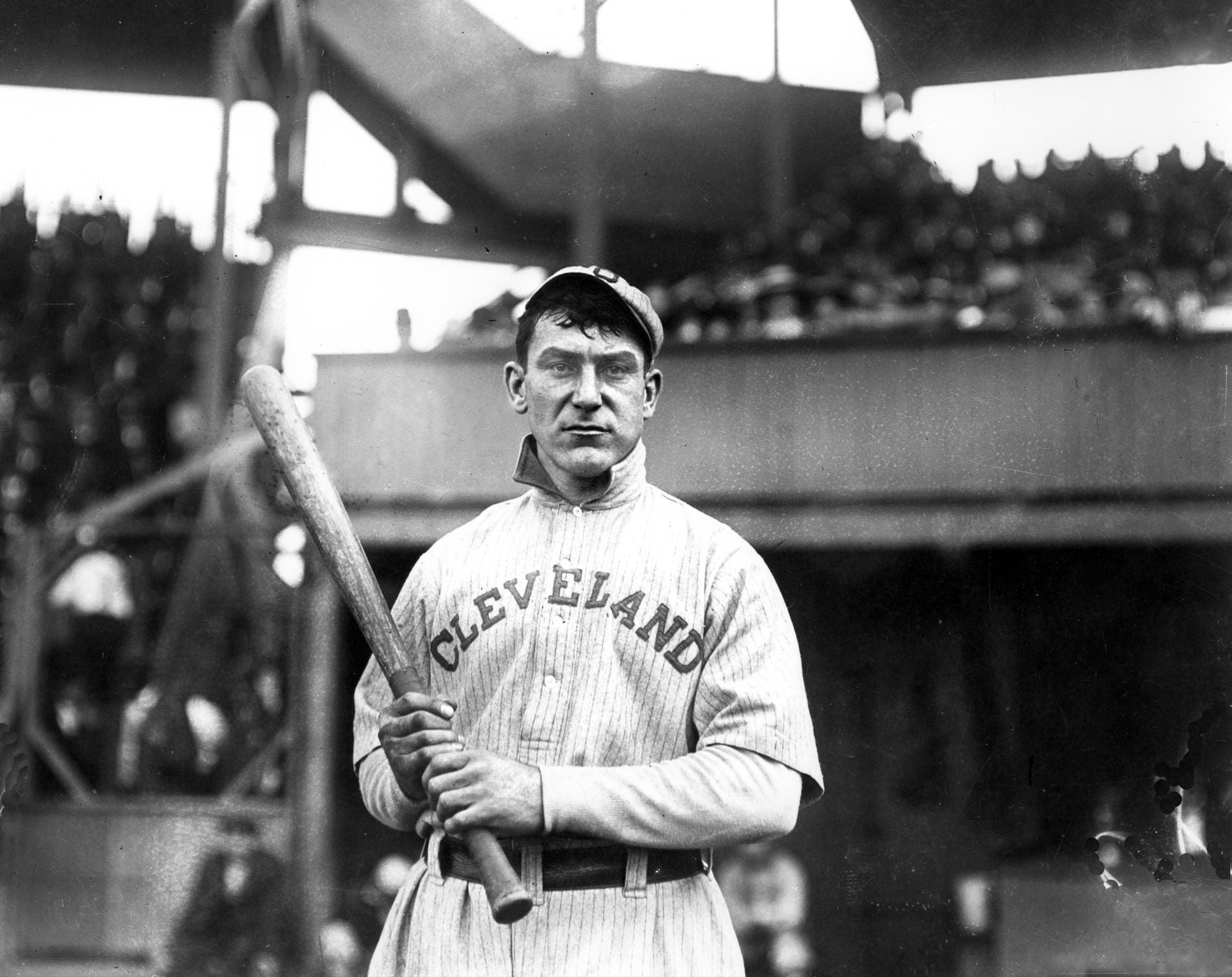
Nap Lajoie

Nap Lajoie was among the perennial batting leaders in the early part of the 20th century who had a career-long rivalry with Ty Cobb, and put together one of the best batting seasons ever seen.

Lajoie began his career in 1896 with the Philadelphia Phillies, and he had several solid seasons, even leading the league in doubles and RBI in 1898. After the 1900 season, the AL was formed, and the teams were offering larger contracts, so Lajoie jumped to the crosstown Athletics for a much larger payday, and the Phillies sued.

Lajoie had one of the greatest seasons in history in 1901 for the A's. He won the Triple Crown with 14 home runs, 125 RBI, and a .426 batting average, which is still the AL record. Not only did he win the Triple Crown, he also led the league with 145 runs scored, 232 hits, and 48 doubles, and would have been an easy choice for MVP if the award existed at the time.

Just as the following season started, the Pennsylvania Supreme Court ruled that his contract was void, and that the only team he could play for was the Phillies. It was determined that the ruling was only valid in Pennsylvania, so Lajoie was traded to the Cleveland Bronchos, who immediately changed their nickname to the Naps in his honor. For the next two years, Lajoie was forced to travel separately from the rest of his team to avoid entering Pennsylvania due to a subpoena related to the case, and he was unable to play any games within the state.

Lajoie led the league in batting average during his first 3 seasons in Cleveland, making it 4 in a row overall, and he again led the league in hits, doubles, and RBI in 1904. The streak came to an end in 1905, when he missed more than half the season due to blood poisoning from a spike injury and a broken ankle not long after his return.

Lajoie continued his stellar play for Cleveland for almost another decade, and even managed to win one more batting title in 1910 with a .384 average, the only break in Ty Cobb's dominance between 1907 and 1915. Lajoie hit over .300 in each of his first 12 seasons and 17 of his first 18 seasons, which is incredible for someone playing in the dead ball era.

When Lajoie retired, he was #2 all-time in hits, and is currently #14 on the list. His career batting average of .338 is #19 all time, and he is seventh among all players in doubles. He never played on a team that reached the postseason, which didn't even exist for 8 seasons early in his career, but that doesn't diminish his accomplishments on the field, especially his magical 1901 season, and he is definitely worthy of being remembered with the best players of all time.

Thursday, May 17, 2018

Top 106 Baseball Players: #76 - Allie Reynolds


Allie Reynolds

Allie Reynolds was the best pitcher of the Yankees dynasty of the late 1940's and early 1950's, and it was his performance in the World Series that brought many championships to New York.

Reynolds broke into the Majors with the Indians in 1942, and split time between starting and relieving. In his second season he led the league in strikeouts, but he never really reached his full potential with Cleveland, and he was traded to the Yankees after the 1946 season.

Immediately upon Reynolds' arrival in New York, the Yankees immediately became contenders again, after having missed the playoffs for 3 straight seasons. The Yankees reached the World Series 6 times in his first 7 years with the team, winning the championship each time, including 5 straight seasons from 1949 to 1953.

His best postseason came in 1949, when he started 2 games, pitching over 12 innings without allowing a run and giving up only 2 hits while also earning a save in relief as the Yankees beat the Dodgers in 5 games.

He was nearly as good the next year, allowing just one run in just over 10 innings in the World Series as the Yankees swept the Phillies, with Reynolds earning the win in Game 2 and the save in the deciding Game 4.

In 1951, he threw 2 no-hitters, the first one coming against Bob Feller and his former team, the Indians, and his second came against Boston, with Ted Williams popping up for the final out in a game which clinched the Yankees at least a tie for the pennant. He was only the second player to record 2 no-hitters in a season, and only 4 have done it since.

In 1952 he had his best regular season, leading the league with a 2.06 ERA and 160 strikeouts, and he was even better in the World Series, recording 2 wins and a save while giving up only 4 runs in 20 innings, again proving his status as the ace of the best team in baseball.

During the 1953 season, the Yankees team bus crashed into an overpass in Philadelphia, and Reynolds injured his back in the accident, and his production dropped off considerably as a result, leading to his early retirement after the 1954 season.

Though he only pitched 13 seasons, Reynolds was the best pitcher for the best team in baseball for 8 years, winning 6 World Series in the process, and completely tearing apart the competition in 2 of them. He was often called upon to finish important games in relief, even though he was the top starter, and that is why he has earned a spot on this list of the all-time greats.

Wednesday, May 16, 2018

Top 106 Baseball Players: #77 - Roberto Alomar


Roberto Alomar

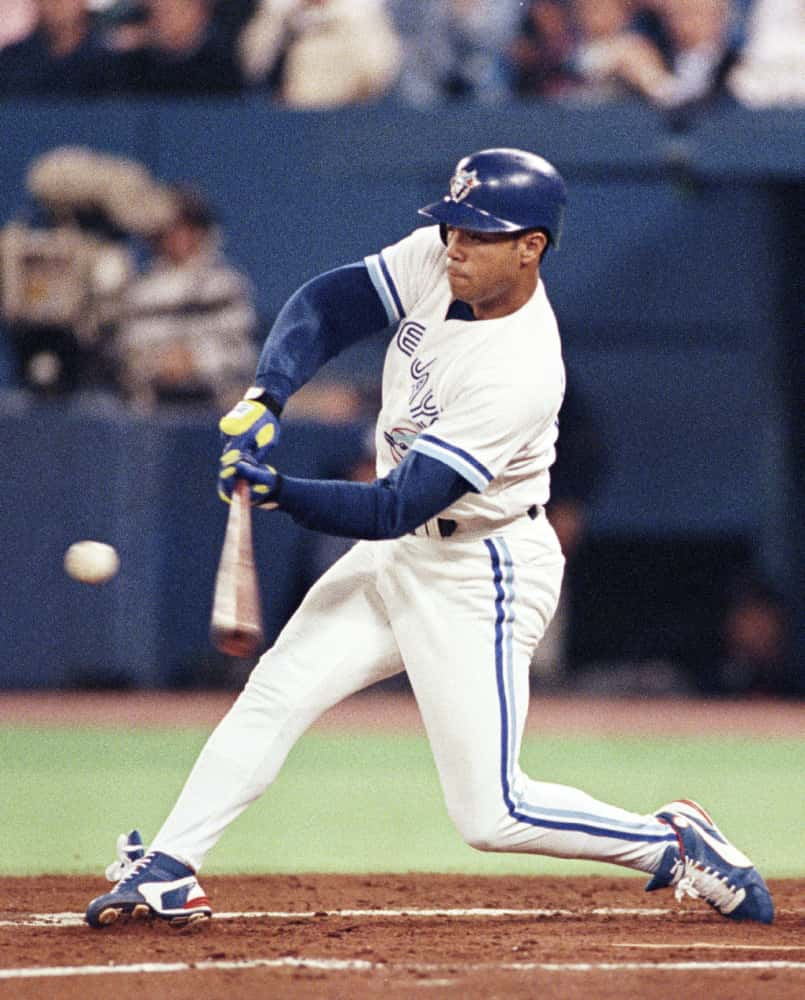
Roberto Alomar was a speedy second baseman who was well-known for his solid all-around game and was instrumental in the only 2 World Series titles for the Toronto Blue Jays.

He reached the Major Leagues with the San Diego Padres in 1988, when he finished 5th in the Rookie of the Year voting, and within 2 years had reached his first All-Star team, but he didn't hit his stride offensively until he was traded to Toronto after the 1990 season.

The Blue Jays reached the playoffs in each of Alomar's first three seasons with the team, and he was one of the team's best players in each of those playoff runs, batting .373 over those seasons and leading the Jays to 2 World Series. In 1992 he was the ALCS MVP, when he hit .423 in a 6-game series against the A's while also stealing 5 bases.

After dominating the ALCS, he struggled a bit in the World Series, but he did end up scoring the winning run in the 11th inning of Game 6, The following season, he hit .480 in the World Series with 6 RBI's as the Jays repeated as champs by taking down the Phillies, marking the third straight year that Alomar was huge in the playoffs, and the second time that he finished the season with a championship ring.

Alomar played two more seasons in Toronto, but the team started to enter a rebuilding process, and he wanted to chase more championships, so he left as a free agent in 1995 to sign with Baltimore, but he left the Blue Jays as the franchise's all-time leader with a .307 batting average. He played 3 seasons with the Orioles, reaching the ALCS twice, but they were never quite able to break through to the World Series.

His time in Baltimore was marred by an incident near the end of the 1996 season, when he became angry after a called third strike and got into a shouting match with the umpire. In the course of the confrontation, Alomar spat in the face of the umpire, and was suspended 5 games for the incident. He claims that the umpire used a racial slur against him, but the two later settled their differences publicly before a game the next season.

Alomar signed with Cleveland before the 1999 season in order to play with his brother Sandy, and while with the Indians he had two of his best seasons. He led the league in runs with 138 in 1999 while setting a career high with 120 RBI's, then had a career-high 193 hits in 2001, along with 100 RBI's and 30 stolen bases.

He played another 3 seasons, but his production dropped off and he retired before the 2005 season. He first appeared on the Hall of Fame ballot in 2010, but fell 8 votes short, the closest anyone has ever come during their first season without being elected, and many feel it was due to the spitting incident, but he was elected easily the following season, and deservedly so.

Alomar finished his career with a .300 batting average and 2724 hits, and he made 12 straight All-Star teams. He was a major contributor to two World Series champions, and played really well in another ALCS, and though he was never the MVP or a full-fledged superstar, he was a very good player for a very long time, and one of the best players of all time.


Monday, May 14, 2018

Top 106 Baseball Players: #79 - Bob Feller


Bob Feller

Bob Feller was one of the youngest players ever to play in the Major Leagues, and he was a star player right from day one, and had it not been for World War II, he probably would have easily been among the top 25 players of all time.

Feller joined the Indians in July 1936, and in his first start he struck out 15 batters, a record for a pitching debut. Two weeks later, he struck out 17, tying the single-game record at the time. He left the team before the season ended to return home to Iowa to begin his senior year of high school.

Two years later, he was called upon to pitch the final game against the Detroit Tigers, whose star player, Hank Greenberg, needed 2 home runs to tie Babe Ruth's record. Feller responded by setting a new strikeout record with 18, and he led the entire league with 240 strikeouts while still a teenager.

Feller led the league in strikeouts for 7 consecutive full seasons, four before the war and 3 afterward. He was definitely the best pitcher in baseball and had been for years when Pearl Harbor was bombed. He left the team the next day to joint the Navy, becoming the first professional athlete to join the service, and he was later joined by many of the greatest players of his era.

His military service cost him nearly 4 years from the prime of his career, but when he came back, he picked up right where he left off, again leading the league in strikeouts and setting a new record for strikeouts in a season with 348 in 1946.

Perhaps the biggest thing lacking in his career was postseason success. He led the Indians to the World Series in 1948, which they won, but Feller lost both of his starts and posted an ERA of 5.02 in those two games, so he was the reason they got there, but not the reason they won. When they returned to the World Series in 1954, he was on the active roster but was not used.

Feller threw 3 no-hitters during his career and 12 one-hitters, both records at the time of his retirement. During the offseasons, he would gather a group of other Major Leaguers and play a series of exhibition games against Negro League teams, and those games played a huge role in helping people realize that the Negro League players were just as good and helped break the color barrier.

Feller was the definition of phenom, and a true strikeout artist, as well as a courageous hero for sacrificing the best years of his career to defend our country. Even though he appears much lower on this list than he would have if he hadn't missed those seasons, there is no way a player of Feller's ability could be left off the list of the all-time greats.


Thursday, May 10, 2018

Top 106 Baseball Players: #82 - Eddie Murray


Eddie Murray

Eddie Murray played 21 seasons in Major League Baseball, earning the nickname "Steady Eddie" along the way, and it fits, since his batting average stayed within a 40 point range for his first 12 seasons, and he missed very few games each season.

His rookie season was 1977, and he started out solid, with a .283 average and 27 homers, and was given the Rookie of the Year award for his efforts. Two years later he helped lead the Orioles to the World Series, and while he was great in the ALCS, with 5 hits and 5 walks in 17 plate appearances, he struggled in the final round, getting only 4 hits in the 7 games.

Over the next 6 years, he became an RBI machine surpassing 110 in each complete season, and leading the league with 78 in the strike-shortened 1981 season. He also led the league in home runs that season, the only time he would accomplish that, though he was quite a consistent long ball hitter through his career.

In 1983 he helped lead the Orioles back to the World Series, and was solid throughout both rounds, getting 9 hits in 9 games, including 3 home runs, and he was able to finish the season with a championship ring, the only one he would earn.

He continued to be Steady Eddie for more than a decade with multiple teams, even leading the league in batting in 1990, and he returned to Baltimore late in his career just in time to hit his 500th home run, which made him the third player in history to reach 500 home runs and 3000 hits, joining Willie Mays and Hank Aaron, later to be joined by Alex Rodriguez, Rafael Palmeiro, and Albert Pujols.

In 1995, at the age of 39, he was able to help the Cleveland Indians get to the World Series, and he hit a home run in each round of the playoffs, even at his advanced age, but he failed to get a second ring, just as he did the following season when he reached the playoffs again in Baltimore, which was the only time he ever reached the playoffs without making the World Series.

Although he was never a superstar, he was a very good player for a very long time, finishing in the top 5 of the MVP voting 6 times, reaching the World Series 3 times, each time in a different decade, and surpassing the two biggest batting milestones by showing up every day and doing his job well, which is why he deserves his spot on this list of the all-time greats.